
Precision Copper, Brass & Bronze CNC Machining — From Prototype to Production
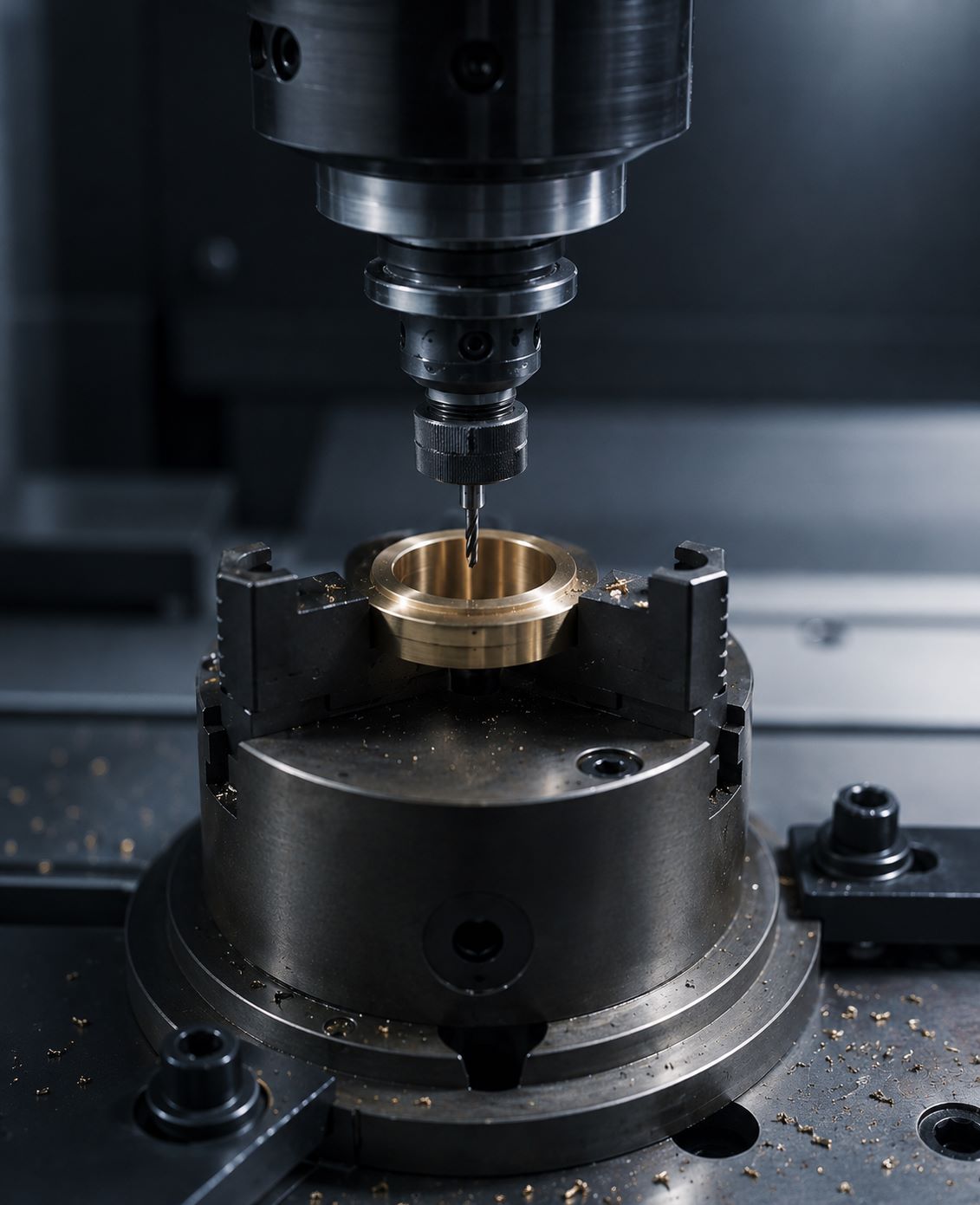
Copper CNC machining at Zonclair delivers reliable horizontal CNC milling and turning for pure copper, brass, and phosphor bronze — materials valued for electrical conductivity, thermal performance, and alloy-specific properties. Standard tolerance is ±0.10 mm on typical parts; high-precision on milling and turning typically reaches ±0.02–0.05 mm, with ±0.01 mm on selected features where the alloy and design allow — confirmed via DFM before quoting. For complex geometries, 5-axis CNC is available on suitable rigid alloys when tighter features are required. Upload your 2D/3D CAD for a free DFM review and a quote within 24 hours.
100% In-House Pre-Shipment Inspection · FAI Available · Electrical & Thermal Components · 24-Hr Quote
Copper CNC Machining You Can Trust
First Article Inspection (FAI)
Dimensional report on your first production run — ideal for electrical connectors, contact assemblies, and customers requiring documented first-piece approval.
100% Pre-Shipment Inspection
Every part is inspected in-house before shipment according to our quality checklist and drawing requirements.
Tight Tolerances
±0.10 mm standard. High-precision to ±0.02–0.05 mm, and ±0.01 mm on selected milling/turning features where the alloy allows — per drawing, confirmed via DFM before quoting.
Electrical & Thermal Components
Bus bars, contacts, heatsinks, connectors, and valve parts — complex geometries and tighter features supported through 5-axis CNC when the alloy and design allow.
Copper CNC Machining
Copper CNC machining covers pure copper, brass, and phosphor bronze — alloys chosen for electrical conductivity, thermal transfer, corrosion resistance, excellent machinability (brass), and elasticity and wear properties (phosphor bronze). Zonclair produces copper alloy components for electrical, electronic, thermal-management, and fluid-control applications.
We combine horizontal CNC milling and CNC turning with process controls tailored to each alloy — chip evacuation for gummy pure copper, surface finish control for brass, and springback management for phosphor bronze. Where needed, 5-axis machining handles complex geometries with tighter tolerances on suitable rigid alloys. Tighter tolerances on milling and turning are assessed per alloy grade. Upload your CAD for a free DFM review before production starts.
- Pure copper (C110 / ETP) — highest conductivity; bus bars, terminal blocks, heatsinks, RF and power contacts
- Brass (C360 / H62) — excellent machinability; connectors, valve bodies, plumbing fittings, instrument hardware
- Phosphor bronze — elasticity and wear resistance; electrical contacts, spring terminals, wear sleeves
- Nickel silver and other copper alloys — contact us for grade and tolerance guidance
Copper Alloys We Machine
Pure Copper CNC Machining
Common grades: C110 (ETP copper), C101 (OFHC).
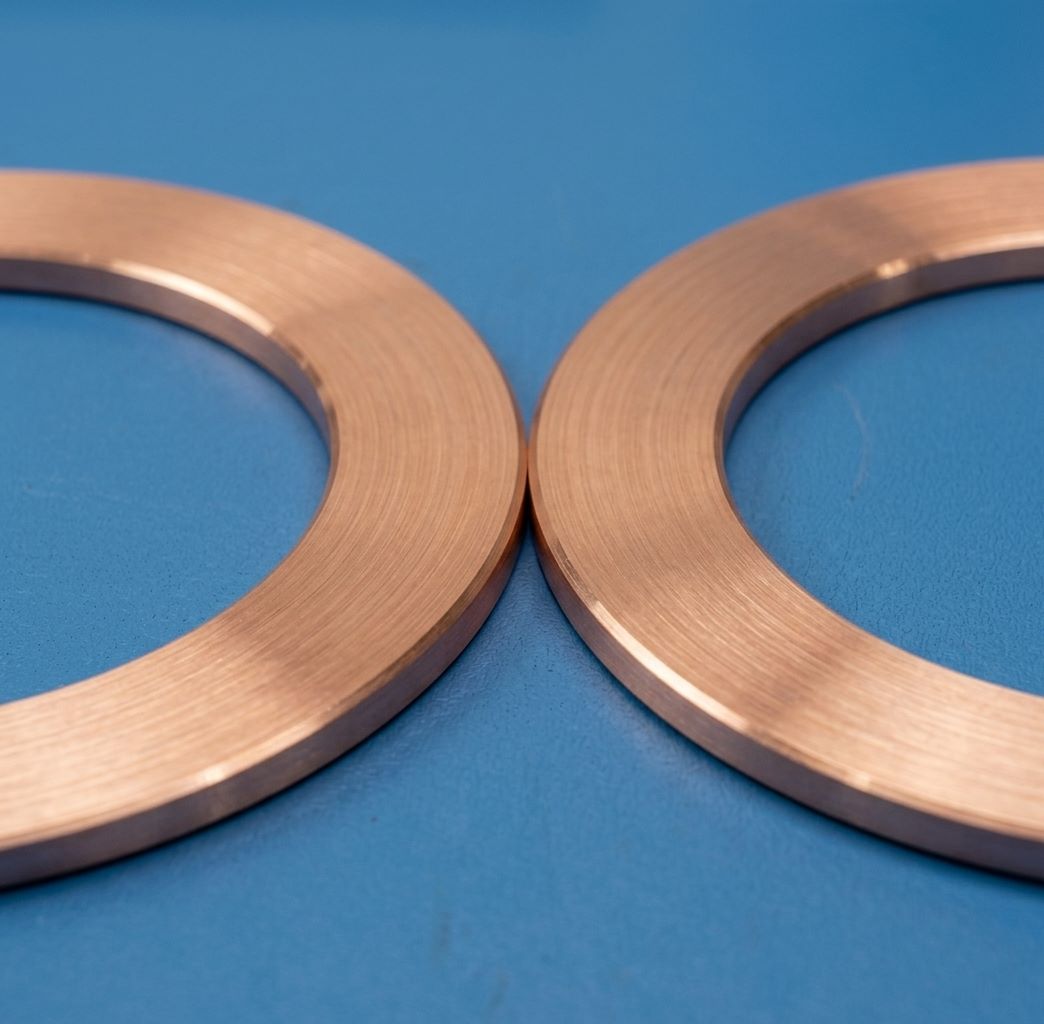
Pure copper offers the highest electrical and thermal conductivity of any common engineering metal. It is ductile and corrosion-resistant, making it essential for power distribution, electronics, and thermal-management components — but its softness and heat sensitivity demand dedicated pure copper CNC machining strategies.
Typical Parts
- Bus bars and power distribution plates
- Electrical contacts, terminals, and connectors
- Heatsinks and thermal spreader plates
- RF and microwave component housings
Machining Precision
Standard: ±0.10 mm. High-precision pure copper CNC machining typically reaches ±0.02–0.05 mm on rigid plates and blocks. ±0.01 mm is evaluated case-by-case — pure copper is highly sensitive to thermal expansion and clamping deformation, so tight tolerances are confirmed via DFM before quoting. This is our most dimensionally challenging copper grade for tight features.
Process Note
We use sharp high-positive-rake carbide tools, high-pressure coolant to flush gummy chips, low and consistent feed rates, and soft-clamp strategies to avoid part distortion. Intermittent cutting and controlled depth-of-cut reduce heat buildup in the workpiece.
Why Zonclair for Pure Copper CNC Machining
Electrical and thermal performance depends on clean, burr-free features and stable dimensions. We focus on chip control, flatness on bus bars, and consistent contact surfaces — with 100% inspection and optional FAI for critical electrical assemblies.
Brass CNC Machining
Common grades: C360 (free-cutting brass), H62 and similar leaded brass alloys.
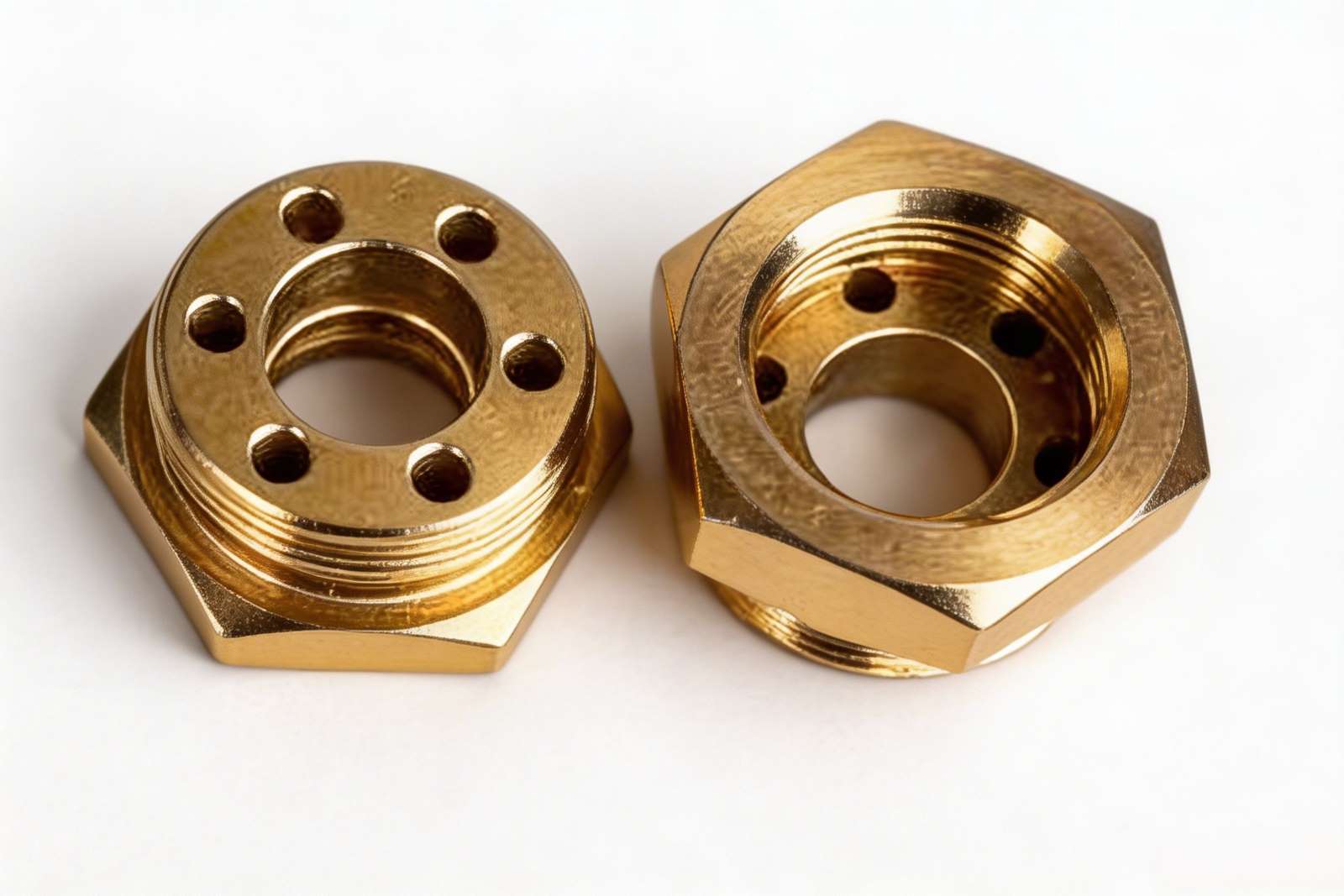
Brass combines good electrical conductivity with outstanding machinability, corrosion resistance, and an attractive gold-tone finish. It is one of the most cost-effective copper alloys for brass CNC machining of precision connectors, valve components, and decorative hardware at volume.
Typical Parts
- Connectors, terminals, and socket housings
- Valve bodies, fittings, and plumbing components
- Instrument and precision hardware
- Decorative caps, knobs, and architectural trim
Machining Precision
Standard: ±0.10 mm. High-precision brass CNC machining services typically achieve ±0.02–0.05 mm for connectors and valve interfaces. ±0.01 mm is achievable on selected features — precision bores, mating faces, and small turned parts — brass is our most capable copper alloy for tight dimensions. Quoted per drawing with CMM verification where specified.
Process Note
Brass machines cleanly at higher speeds than pure copper. We leverage advanced brass CNC machining techniques, using coated carbide tools, low-viscosity coolant to limit zinc adhesion, and optimized tool paths for consistent surface roughness — followed by in-house polishing or plating when cosmetic finish matters.
Why Zonclair for Brass CNC Machining
Brass rewards efficient, high-quality machining. We deliver consistent Ra values, clean threads, and uniform appearance for connector and valve programs — with in-house plating and flexible MOQ from prototype to batch production.
Phosphor Bronze CNC Machining
Common grades: C510, C521, PB102 and similar.
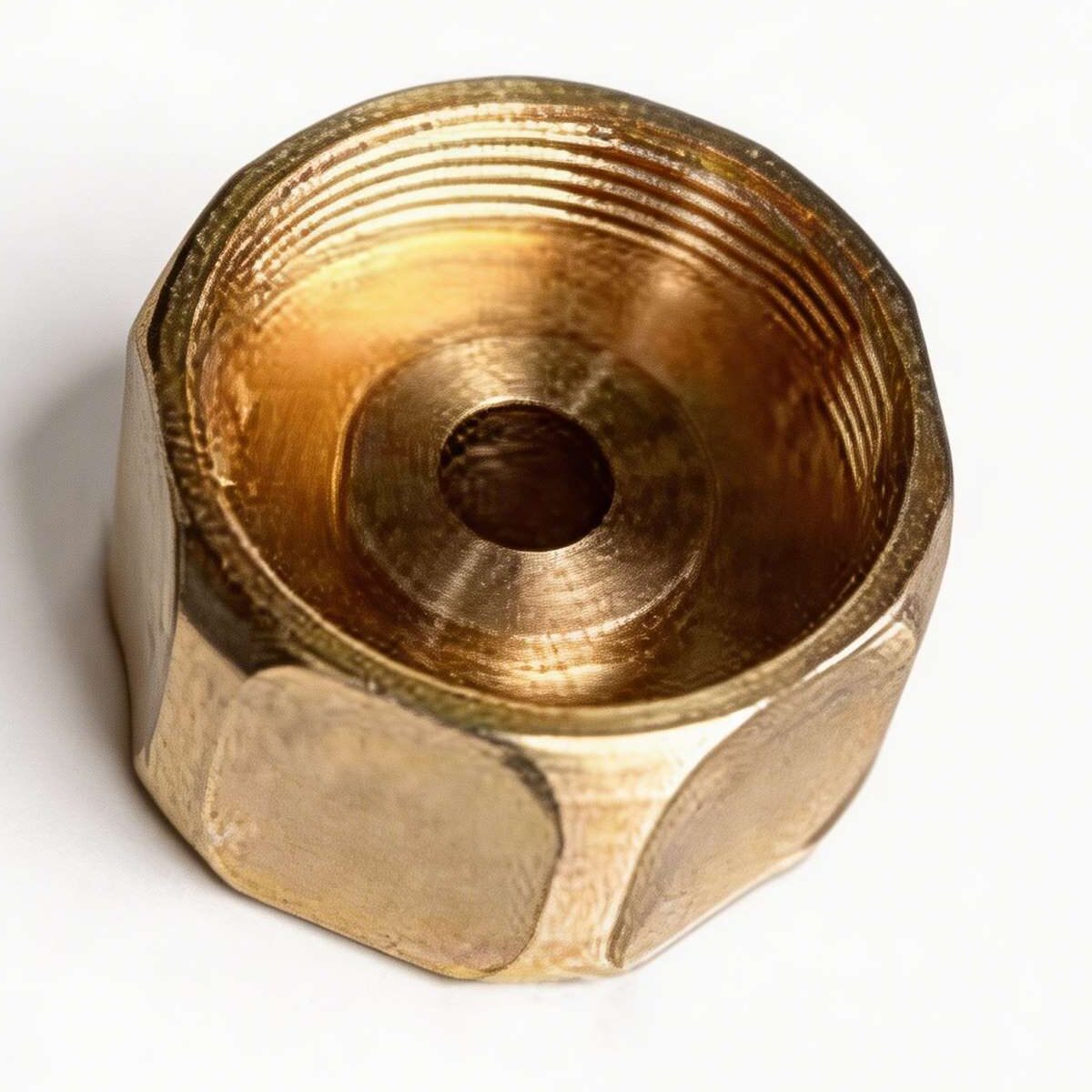
Phosphor bronze is a copper-tin alloy with excellent elasticity, fatigue resistance, and wear properties. It is widely used for specialized phosphor bronze CNC machining of electrical contacts, spring elements, and bearing sleeves where repeated flexing and low friction are required.
Typical Parts
- Electrical contact fingers and spring terminals
- Wear sleeves and thin-wall bushings
- Non-magnetic connector components
- Precision instrument and relay parts
Machining Precision
Standard: ±0.10 mm. High-precision phosphor bronze CNC machining services typically achieve ±0.02–0.05 mm for contact and sleeve features. ±0.01 mm on selected features is possible on rigid, short parts — phosphor bronze exhibits elastic springback, so tight tolerances require finish-pass strategy and are confirmed via DFM before quoting.
Process Note
We account for springback in programming, use sharp tools and moderate feeds, and perform dedicated finishing passes on critical contact surfaces. Our advanced phosphor bronze CNC machining setup utilizes low clamping force and supported fixtures to prevent thin-wall distortion on sleeve-type parts.
Why Zonclair for Phosphor Bronze CNC Machining
Contact and spring parts demand consistent thickness, burr-free edges, and stable spring force. We combine elastic-aware programming with in-house deburring and optional plating for long-life electrical assemblies.
Copper Alloy Selection Guide
| Material | Machinability | Conductivity | Typical Tolerance | Best For | Typical Post-Process |
|---|---|---|---|---|---|
| Pure Copper | Difficult — soft, gummy chips | Excellent | ±0.10 mm std · ±0.02–0.05 mm high · ±0.01 mm case-by-case | Bus bars, heatsinks, contacts | Deburr, polish, tin/silver plate |
| Brass | Excellent — free-cutting | Good | ±0.10 mm std · ±0.02–0.05 mm high · ±0.01 mm on selected features | Connectors, valves, fittings | Polish, lacquer, nickel/chrome plate |
| Phosphor Bronze | Moderate — springback | Good | ±0.10 mm std · ±0.02–0.05 mm high · ±0.01 mm selected features | Contacts, springs, sleeves | Deburr, optional plate |
Not sure which alloy fits your application? Upload your drawing for material and DFM recommendations.
Copper CNC Machining Challenges & Our Solutions
High Ductility & Chip Clogging (Pure Copper)
Challenge: Pure copper is soft and ductile — chips curl, clog flutes, and weld to the tool, causing poor surface finish and dimensional drift.
Solution: Sharp high-positive-rake tools, high-pressure coolant directed at the cutting zone, optimized speed/feed, and frequent chip clearance to maintain stable cuts.
Thermal Expansion & Dimensional Drift (Pure Copper)
Challenge: Copper conducts heat rapidly into the workpiece; thin plates and long bus bars expand and distort during machining.
Solution: Intermittent cutting, flood cooling, symmetric roughing sequences, and soft-clamp fixtures that hold without bending — final dimensions taken after the part reaches stable temperature.
Chip Adhesion & Surface Finish (Brass)
Challenge: Zinc in brass can adhere to tool edges over long runs, causing rough surfaces and fit inconsistency on connectors and valve interfaces.
Solution: Coated carbide tools, low-viscosity coolant, planned tool changes, and finishing passes — plus in-house polishing for cosmetic surfaces.
Springback & Elastic Recovery (Phosphor Bronze)
Challenge: Phosphor bronze springs back after cutting; thin contact fingers and sleeves can move off nominal dimensions.
Solution: Springback allowance in programming, supported fixturing, low clamping force, and dedicated finish passes on contact and bore features.
Quality Control & Precision Metrology
Quality is built into every step of our copper CNC machining process. Each custom part undergoes rigorous in-house inspection before shipment — supported by advanced metrology equipment including ZEISS SPECTRUM CMM (Coordinate Measuring Machines), optical comparators, and spectrometers for alloy verification.
- 100% pre-shipment dimensional inspection against drawing requirements
- Standard tolerance: ±0.10 mm on typical parts unless your drawing specifies otherwise
- High-precision copper machining achieves ±0.02–0.05 mm and ±0.01 mm on milling/turning — varies by copper alloy and feature; confirmed via DFM before quoting
- Advanced copper CNC machining services include 5-axis capability for complex geometries on suitable rigid alloys — tolerance confirmed per drawing via DFM
- Optional First Article Inspection (FAI) with full dimensional report
- Full material traceability from stock to finished part
- Documented inspection records available on request
Standard delivery is ±0.10 mm unless specified on your drawing. High-precision up to ±0.02–0.05 mm is typical on brass and selected copper alloy features; ±0.01 mm on selected features is alloy-dependent and confirmed via DFM before quoting. Sub-0.01 mm as routine delivery on copper alloys is not offered.
Learn more: Precision & Tolerance Standards · Quality Control & Inspection
In-House Surface Finishing & Plating
Zonclair provides comprehensive in-house post-processing to complement our copper CNC machining services. We ensure your custom machined copper components are delivered closer-to-finished from a single certified supplier:
- Polishing & buffing — mirror or satin finishes on brass decorative and connector surfaces
- Precision Plating — in-house nickel, tin, silver, and chrome plating for corrosion protection and electrical conductivity
- Anti-tarnish treatment — lacquer and protective coatings for brass hardware
- Deburring & cleaning — 100% burr-free edges on high-conductivity electrical contacts and bus bars
- Secondary operations — precision tapping, reaming, and hardware installation
See all available finishes: Surface Finishes